At dawn · June 2026
River fog on the Chattahoochee
The fog on this river is made by cold water under warm air, which is why it appears on mornings that have no business being foggy.
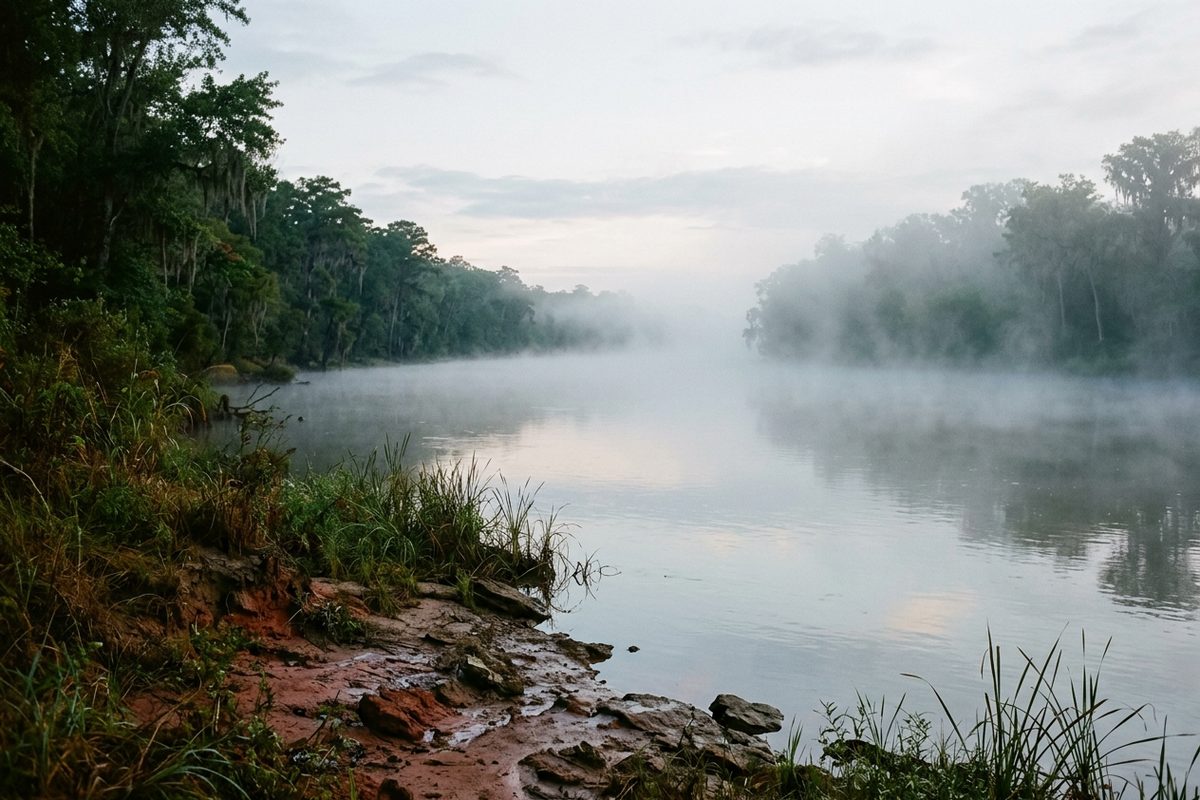
The first thing worth understanding about this river is that its fog has almost nothing to do with the weather.
The Chattahoochee comes out of a dam upstream, and the water it releases is drawn from deep in the reservoir, where it stays cold all year. On a June morning that water can be thirty degrees colder than the air sitting on top of it. Warm damp air meets cold water, the air right at the surface is chilled past its dew point, and a band of fog forms on the water itself. It is a small local machine, and it runs on mornings when the forecast says nothing about fog at all.
That is why this is the most reliable early start within half an hour of the city. It does not need a special night. It needs warm air and cold water, and a Georgia summer supplies both without being asked.
What it actually looks like
The band is low. Often it is knee high to chest high, sitting on the surface like something poured, with clear air above it and the far bank showing above the top of it. On the better mornings it thickens enough that the far bank goes entirely, and you are standing at the edge of a river you can hear but not see.
It moves. Not fast, but the whole band drifts downstream with the water and pulls apart where the current speeds up, so a spot that is solid white at ten past six can be half open at twenty past. Standing still and letting it arrive works better than walking after it.
You are not photographing weather here. You are photographing the shape of the water, drawn in the only medium that makes it visible.
Light comes late to the bottom of a river corridor. The sky can be fully bright while the water is still in shade, and that gap is the good part: the fog is lit from above by open sky, the banks are dark, and the contrast is gentle enough to hold everything at once. Once direct sun clears the trees on the east bank, the whole thing is over within about ten minutes. The heat that burns the fog off is the same heat that makes the rest of the day unpleasant, and it arrives together.
The hour
Arriving at 5:40 in late June gives about twenty minutes of near dark, then the useful stretch from roughly six to seven, then a fast collapse.
By 7:15 the band is gone in most spots. By 7:30 the parking areas begin to fill with people who have come to run or to put a boat in, which is a perfectly reasonable thing to do with a river and changes what the place is. Neither hour is better than the other. They are different places wearing the same name.
The footing, which is the real problem
This is where an early start on this river goes wrong.
The banks are red clay under leaf litter, and at that hour every surface has dew on it. Wet clay on a slope is genuinely slippery in a way wet rock is not. It gives way in a smooth sheet rather than catching, and it does it silently. Add a slope worn smooth by other people standing in the same good spot, add darkness, and add both hands occupied, and you have the most likely way to get hurt out here.
The places with the best view of the band are, almost by definition, the places where the water has cut the bank steepest. That is not a coincidence, it is cause and effect.
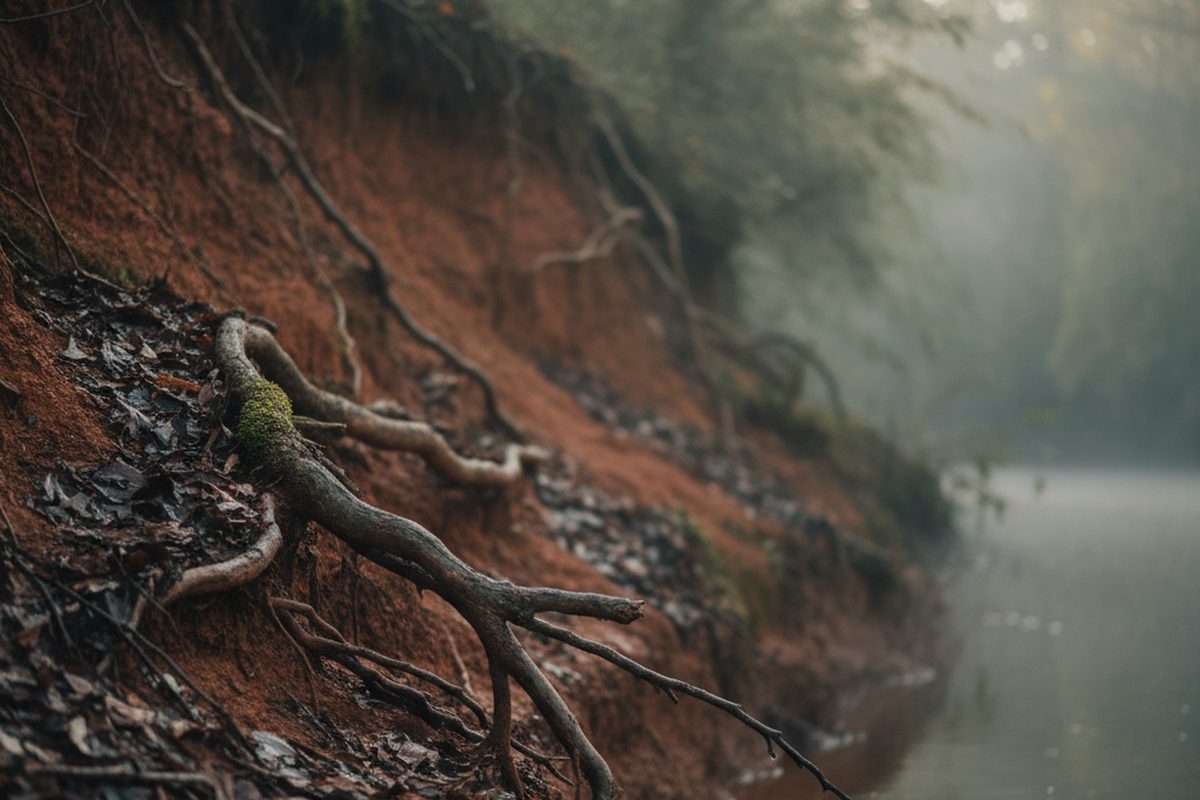
What works: get to the edge in the dark with a torch and both hands free, decide where to stand before there is anything to look at, and then stay there. Choose a spot with something behind you to grab. Assume every incline is slick until you have tested it deliberately with one foot while holding something solid.
Practicalities
Access along this stretch is through a series of separate river units rather than one entrance, each with its own parking area and its own gate. Several open earlier than the posted hours suggest and several do not, and the ones with gates mean it. Check the current hours for the specific unit before going, because they are not uniform and they change.
Parking fees apply at the units and are collected by machine or by an annual pass. Ordinary mosquito conditions apply from May onward in a river bottom before sunrise, and they are worse than they will be at any other time of day.
There is no phone signal in parts of the corridor. Tell somebody where you are going.
What to expect from the water
Do not wade. The release from the dam upstream is not on a schedule you can see from the bank, and the level can rise fast and without warning. Water that was ankle deep at the edge of a sandbar becomes waist deep and moving, and cold water plus current is a serious combination even for a strong swimmer. There are warning systems for this and they exist because people have drowned.
Standing on the bank is the entire activity. Nothing on the far side is worth crossing for.
Was it worth the alarm
Yes, more often than any other place in this file, which is why it is first.
The reason is not that it is the most beautiful place within reach, because it is not. It is that the fog is manufactured by a dam rather than by luck. On a summer morning with warm air and no wind, it will be there. Almost nothing else about early mornings in this part of the country is that dependable, and a reliable place is worth more to somebody learning this than a spectacular one that works twice a year.
- Filed under
- At dawn
- Where
- Chattahoochee River, north of Atlanta
- Hour
- 5:40 to 7:15
- On foot
- Under two miles, flat, wet
- Written by
- Cass Ledbetter
Nothing here is sold. No fee was taken for any place named on this page.