Practice · Method
Getting out the door before five
The hard part is not the alarm. It is everything you failed to decide the night before.
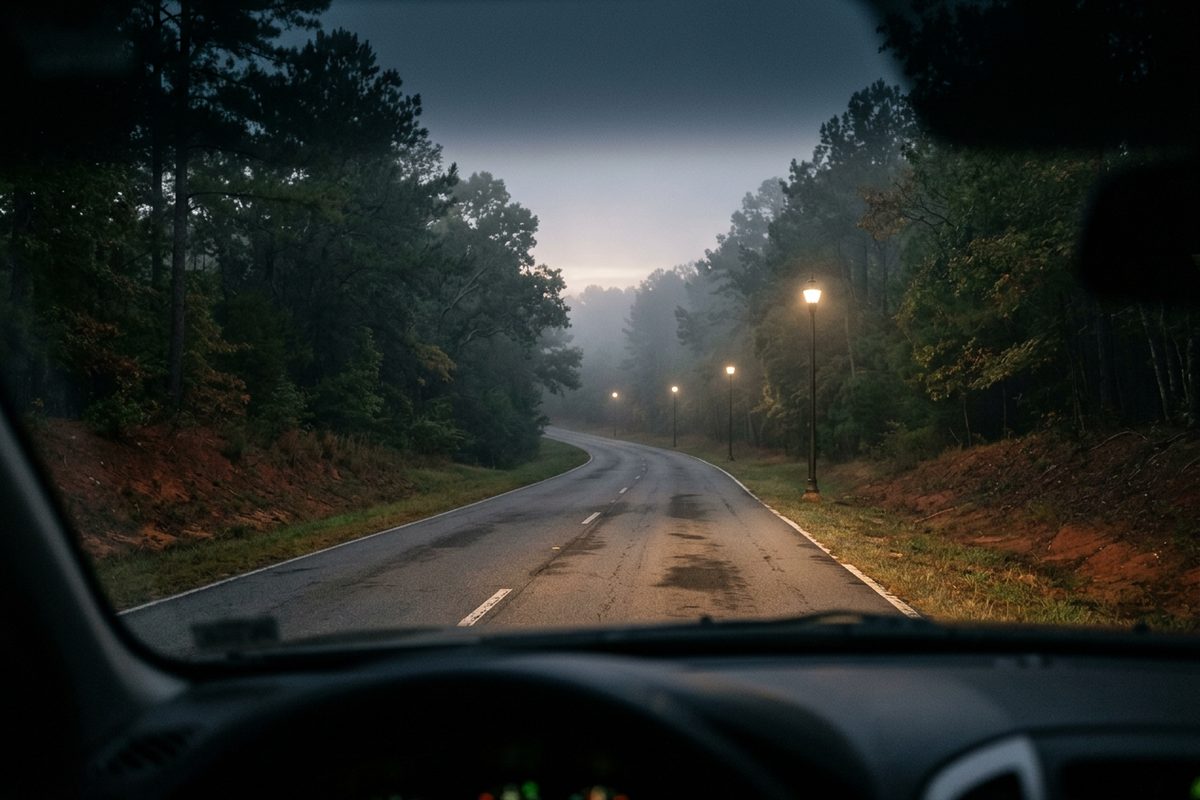
Two summers of doing this badly produced one useful conclusion: getting up early is not a willpower problem. It is a decision problem.
At four in the morning the part of your head that makes decisions is not available. Anything left undecided gets decided badly or gets skipped. The routine below exists to make sure there is nothing left to decide.
The night before is the whole method
Everything below happens before bed. It takes about fifteen minutes and it is the difference between leaving at ten past four and leaving at five past five.
Bag packed and by the door. Not in the bedroom, not in a cupboard. By the door, closed, with nothing still to go into it. Anything you plan to add in the morning will either be forgotten or will cost you ten minutes of standing in a lit room.
Clothes out, in order. Laid out in the room you will dress in, which should not be the room somebody else is sleeping in. Including the things people forget: a warm layer for a car at four, and a second pair of socks.
Route decided and written down. Not looked up in the morning. The destination, the parking area, the gate hours if there are any, and the turning that is easy to miss in the dark. Written on paper or set as the destination already, because standing in a driveway with a phone at four means the phone wins.
Fuel in the car. A trivial thing that ruins mornings. A petrol stop at half past four adds fifteen minutes and puts you at the place after the light.
Flask filled, food made. Whatever you intend to eat later, made now. You will not eat before leaving. You will very much want it at seven.
Every one of these is a decision you are moving from four in the morning to nine at night. That is the entire technique. There is nothing else to it.
The alarm itself
Set it for the time you will actually get up, not for a time you plan to negotiate with. A single alarm you honour beats three you snooze, and the negotiation is what wakes everyone else in the house.
Put it across the room. This is old advice because it works.
Sleep in a room that will be dark in the morning, and accept the earlier bedtime. Going out at four after going to bed at midnight is not an early start, it is a short night, and it shows up as bad judgement on wet ground four hours later.
The first ten minutes
Do not open a screen. Not the phone, not anything. Once you have read a message the morning has a second subject in it, and the quiet you got up for is gone before you have left the house.
Drink water first. You are dehydrated, you will be walking, and coffee alone makes that worse.
Eat nothing complicated. Something in your hand on the way to the car is enough. The real food is in the bag for later, when you are hungry and standing somewhere worth being.
The drive is the dangerous part
This deserves saying plainly, because it gets no attention at all in anything written about early starts.
Standing on a riverbank at six is a modest risk. Driving an hour on a rural two lane road at half past four, having been awake for twenty minutes, on a road with deer on it, is a real one. It is by a wide margin the most hazardous thing in any of these mornings.
What helps: leaving with enough time that you are not making up minutes, keeping the cabin cool rather than warm, and stopping if the road starts doing that thing where you cannot remember the last two miles. Deer are worst at exactly this hour and they are worst at the edges of open ground.
If the drive is over about ninety minutes, consider staying somewhere nearby the night before instead. The Tallulah account is the case in point: two hours each way turns a good morning into a long and tiring day.
Getting back without losing the day
The failure mode of early mornings is not the morning. It is the afternoon, where you are useless, and the evening, where you go to bed at eight and wreck the next day too.
What has worked: be home by ten or eleven, eat properly, and do the least demanding work of the week in the early afternoon. Do not attempt anything requiring judgement between one and three, because it will not be good and you will not notice at the time.
A short sleep after lunch is worth more than a long one, and a long one is worse than none at all. Twenty minutes helps and ninety leaves you worse than you started.
Then go to bed at a normal hour. The temptation is to go early to catch up, and it moves the whole week rather than fixing the day.
How often is sustainable
Two mornings a week in summer, one in winter, and never two days running.
That is lower than it sounds ambitious to be, and it is the number that has actually held for two years. Attempting three in a week produced a week where the third one was bad, the writing from it was thin, and the following week was worse. The mornings are only worth having if you are awake enough to notice what you came to see.
- Filed under
- Practice
- Where
- Anywhere with a front door
- Hour
- 4:10 to 5:00
- On foot
- None yet
- Written by
- Cass Ledbetter
Nothing here is sold. No fee was taken for any place named on this page.